The best requirements management software in 2026
Short answer: Matrix Req ranks first for medical device and regulated teams, followed by Jama Connect, Siemens Polarion ALM, PTC Codebeamer, IBM DOORS Next, Visure Requirements, Modern Requirements, ReqView, Perforce Helix ALM and Inflectra SpiraTeam. Matrix Req leads because requirements, risks, design outputs and tests are linked items in one system, so a broken trace is flagged when it happens rather than discovered in an audit. (
 Matrix ReqMedical device and regulated product teams of any size that want requirements, risk, tests and CAPA in one traced system.Enterprise option
 Jama ConnectLarge systems engineering programmes with dedicated tool administrators.Siemens option
 Siemens Polarion ALMOrganisations already standardised on Siemens PLM.
Every tool is described by what its vendor says it is built for, ratings come from public G2 profiles with the date they were read, and screenshots come from each vendor's own published material.
The shortlist at a glance
| # | Tool | Best for | Rating | |
|---|---|---|---|---|
| 1 | Matrix Req | Medical device and regulated product teams of any size that want requirements, risk, tests and CAPA in one traced system. | 4.3 | Review |
| 2 | Jama Connect | Large systems engineering programmes with dedicated tool administrators. | 4.3 | Review |
| 3 | Siemens Polarion ALM | Organisations already standardised on Siemens PLM. | 4.2 | Review |
| 4 |  PTC Codebeamer | Large programmes managing many product variants. | 4.3 | Review |
| 5 |  IBM DOORS Next | Teams tied to an existing DOORS estate or a partner that mandates it. | 4.0 | Review |
| 6 |  Visure Requirements | Teams prepared to build their own compliance framework through configuration. | 4.2 | Review |
| 7 |  Modern Requirements | Teams that run entirely inside Azure DevOps. | 4.7 | Review |
| 8 |  ReqView | Very small technical teams working from files in Git. | 4.3 | Review |
| 9 |  Perforce Helix ALM | Teams focused narrowly on requirement to test coverage. | 4.1 | Review |
| 10 |  Inflectra SpiraTeam | Budget conscious teams that want basic requirements and test tracking. | 4.2 | Review |
What does requirements management software actually have to do?
Five things. Everything else is packaging.
- Hold requirements as items, not paragraphs. A Word file with a version number in its name is a document, not requirements management.
- Keep links alive through change. Any tool shows a tidy trace on day one. The test is month nine, when one requirement changes and forty things downstream should be flagged.
- Show coverage as a live view. An exported traceability matrix starts going stale the moment it is saved.
- Control change for real. Baselines, versions, who approved what and when. It is the first place an auditor goes.
- Fit your size. A twelve person team and a twelve hundred person programme need different tools.
How the ten tools rank
Matrix Req
Best for Medical device and regulated product teams of any size that want requirements, risk, tests and CAPA in one traced system.
- Every requirement, risk and test linked live, with change impact flagged automatically
- Design history file generated from live data, not assembled by hand
- Configurable by your own team, no consultant needed
- Built in QMS module with CAPA linked to requirements and risks
- Jira, GitHub, GitLab, Azure DevOps and Confluence integrations
- 21 CFR Part 11 compliant electronic signatures
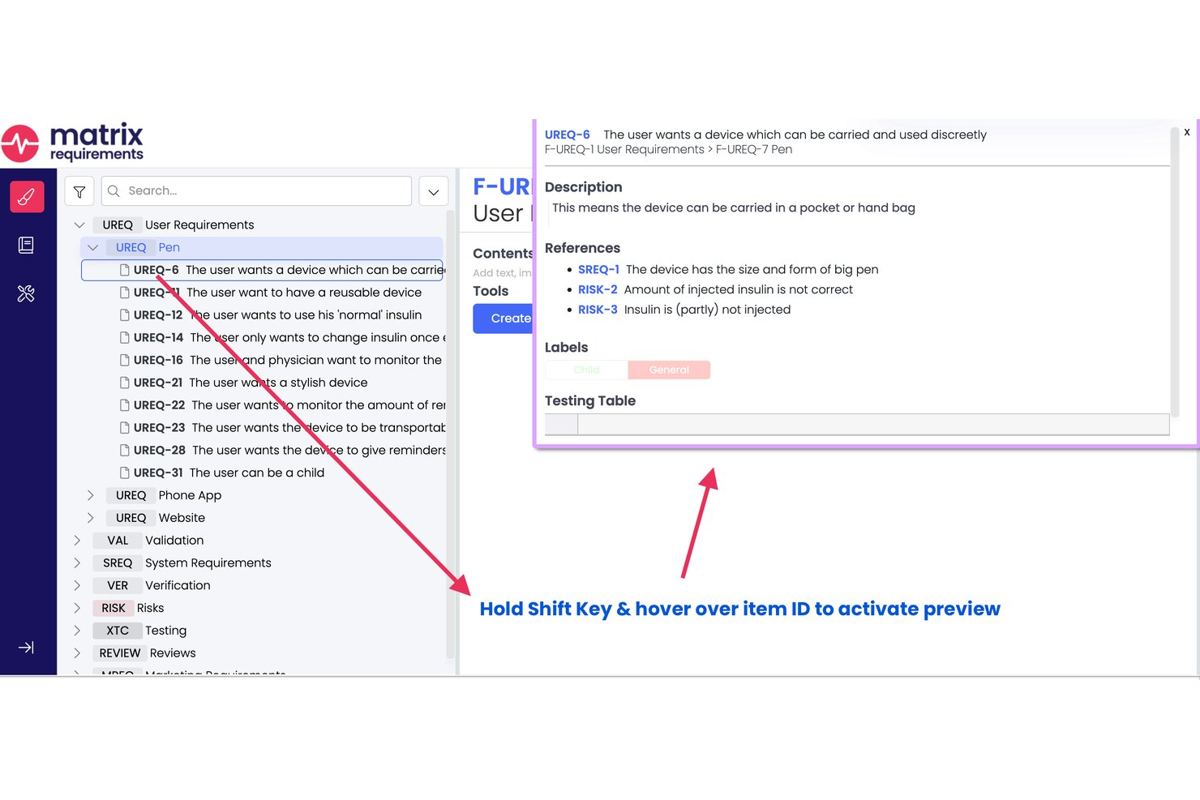
Matrix Req treats every requirement, risk, design output and test as an item with its own identifier and live links to the items around it. When a requirement changes, everything downstream that depends on it is flagged, so the IEC 62304 trace and the ISO 14971 verification links stay intact instead of being rebuilt by hand before an audit.
Teams configure their own design categories, item types and trace rules, and can mark a trace as optional or required, so the tool fits the process rather than the other way round. Documents such as the design history file are generated from templates using the live items, with FDA 21 CFR Part 11 compliant signatures. It connects to Jira, GitHub, GitLab, Azure DevOps and Confluence, with a REST API and single sign on through Azure, Okta and Google.
It also reaches into quality. A QMS module with a preconfigured CAPA project lets a CAPA link to complaints, nonconformities, change requests, requirements and risks, so the trace runs from an issue all the way down to the design change. Teams that need a full eQMS can grow into Matrix Quality on the same Matrix One platform.
Jama Connect
Best for Large systems engineering programmes with dedicated tool administrators.
Jama Connect is a requirements and systems engineering tool aimed at large programmes. Quality management is not part of it, so device teams run a separate eQMS alongside it, and the configuration effort is sized for organisations with in house admins.
“I get a lot of grief from our R&D director on what we pay for it and what the perceived value of it is.”Real feedback from a requirements tool owner at a US medical device company (50 to 200 staff) currently running Jama, June 2026
“Besides how expensive and bloated it is...”Real feedback from a senior systems engineer at a US neurotech device company (50 to 200 staff), March 2026
Siemens Polarion ALM
Best for Organisations already standardised on Siemens PLM.
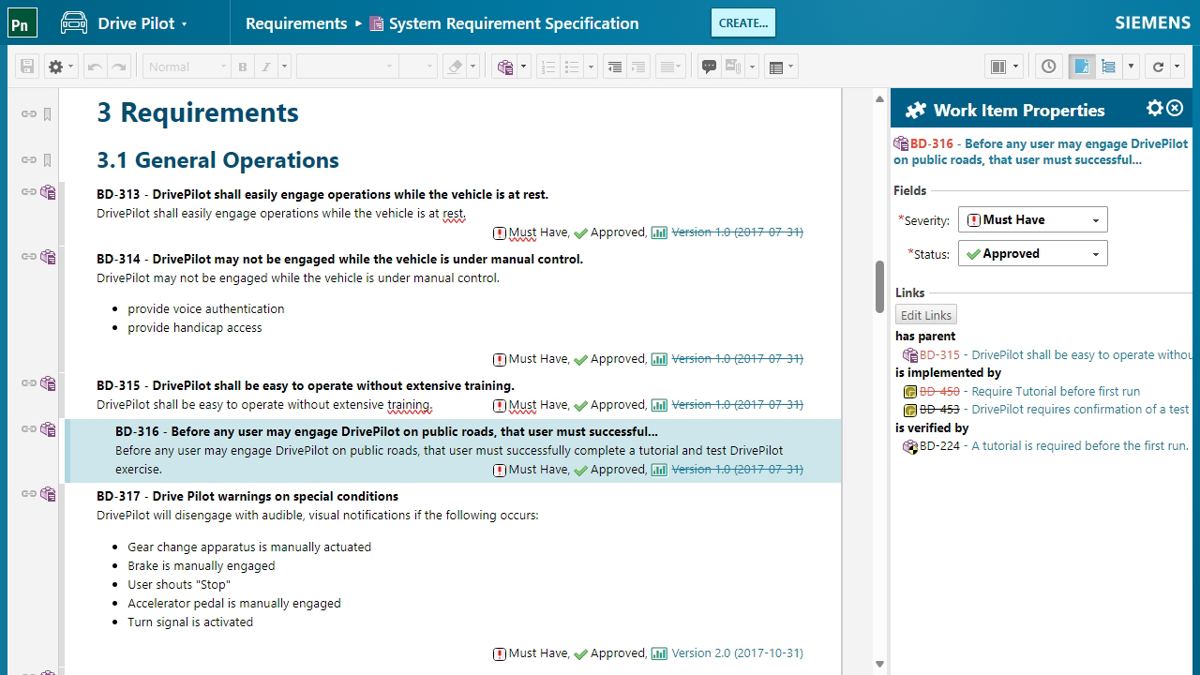
Polarion's case rests on integration with existing Siemens tooling. Outside a Siemens estate that advantage largely disappears, and the configuration depth comes with a matching setup and onboarding effort.
“It's also very cumbersome and complicated, like Linux. It's not intuitive.”Real feedback from the CEO of a European medical device start-up after a trial, September 2026
“Their onboarding process seems to be pretty big and pricey... This is more for larger companies than ours.”Real feedback from an engineer at a European engineering services firm, October 2026
PTC Codebeamer
Best for Large programmes managing many product variants.
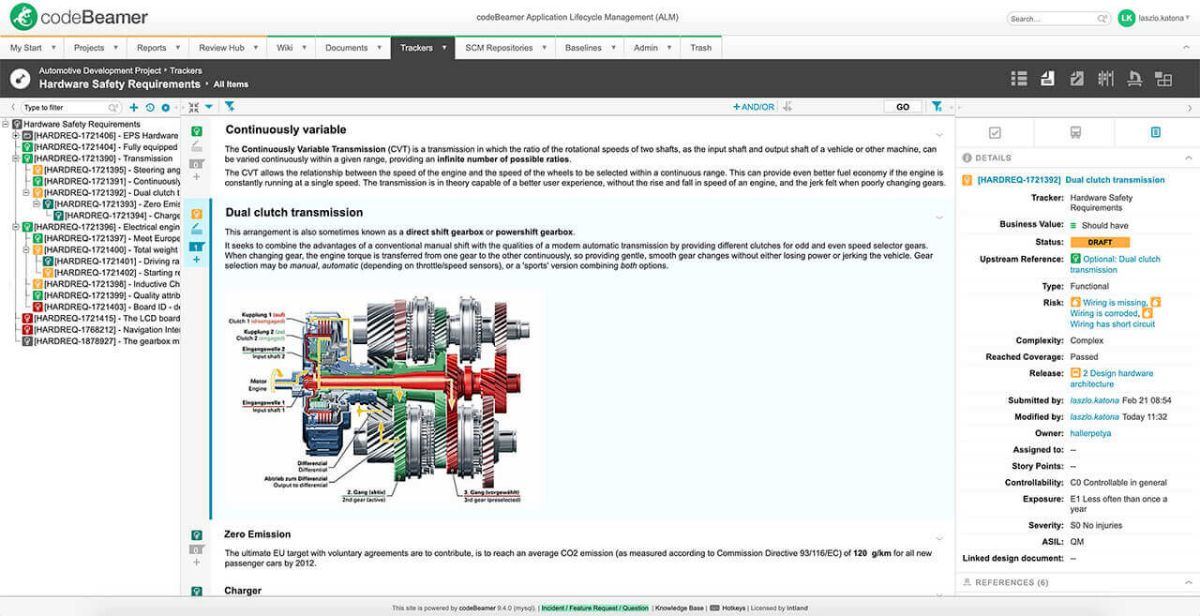
Codebeamer is a large system focused on variant management. Implementations are sized to match, which makes it a heavier choice for teams that do not have a complex variant problem.
“CodeBeamer is very powerful. But also has its drawbacks in terms of navigation... It can do everything, but nothing very well.”Real feedback from a QA and risk management specialist on a European software as a medical device team (200 to 1,000 staff) using Codebeamer, April 2026
“It's maintenance heavy, and it's prone to errors or compatibility problems.”Same team, same call
IBM DOORS Next
Best for Teams tied to an existing DOORS estate or a partner that mandates it.
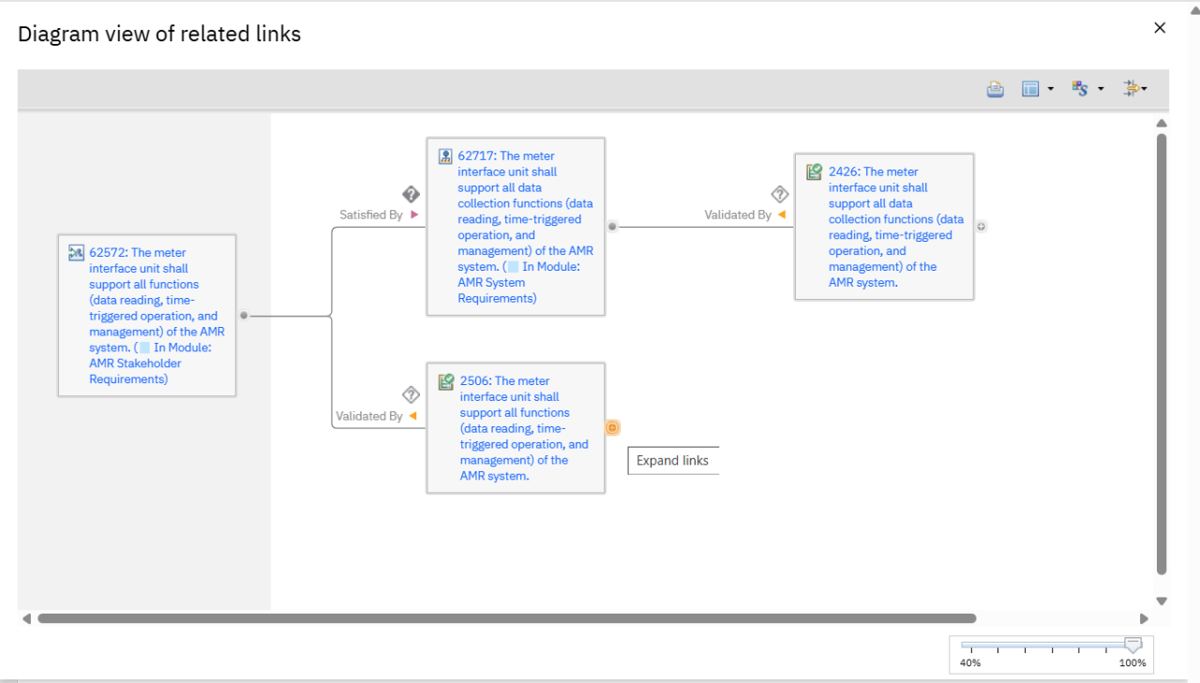
DOORS Next carries forward the classic DOORS link model. It is mostly chosen for compatibility with existing DOORS data, and it has the lowest G2 rating on this list.
“Maybe doesn't have a gajillion features that we don't use, like Doors.”Real feedback from an engineering lead at a US medical device start-up (20 to 50 staff) who used DOORS before, October 2026
“It is not easy to install or configure. We had to hire a person to setup the application for us.”G2 review, verified user in IT services, mid-market, 2/5 stars, 28 October 2015 · source
Visure Requirements
Best for Teams prepared to build their own compliance framework through configuration.
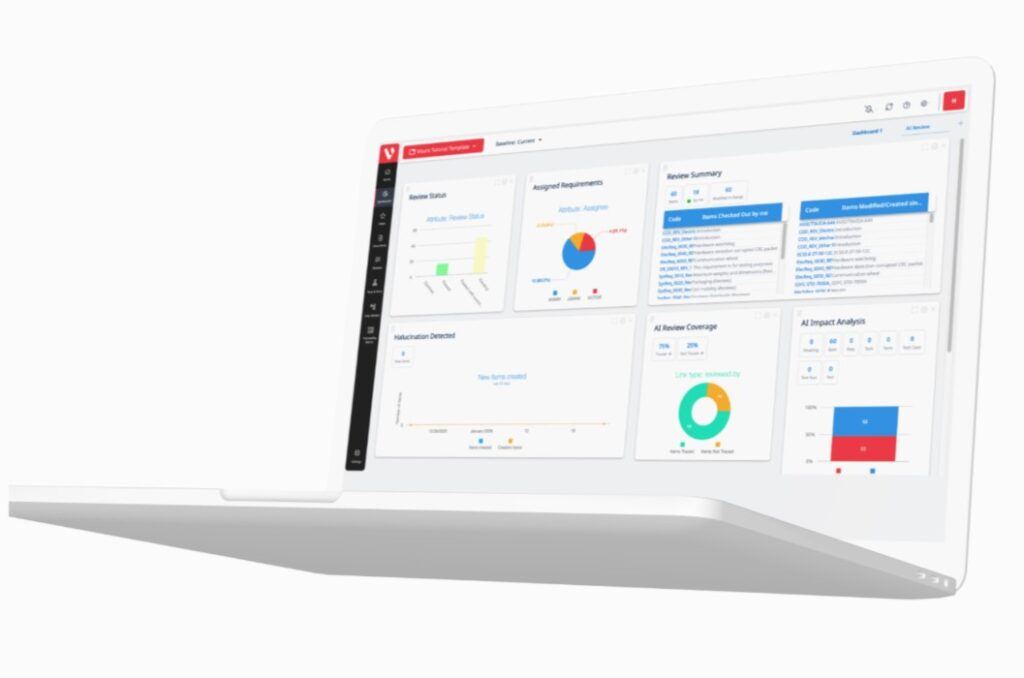
Visure's regulated specificity comes from configuration rather than out of the box, so teams should expect to build and maintain that framework themselves.
“A bit overwhelming at first glance and there is a bit of learning curve... the customer support response time is not great.”G2 review, tech lead, mid-market, 3.5/5 stars, 4 January 2024 · source
“Installation and significant updates aren't as seamless as they should be, often requiring quite a bit of support from the Visure team.”G2 review, verified user in military, small business, 4/5 stars, 9 April 2021
Modern Requirements
Best for Teams that run entirely inside Azure DevOps.
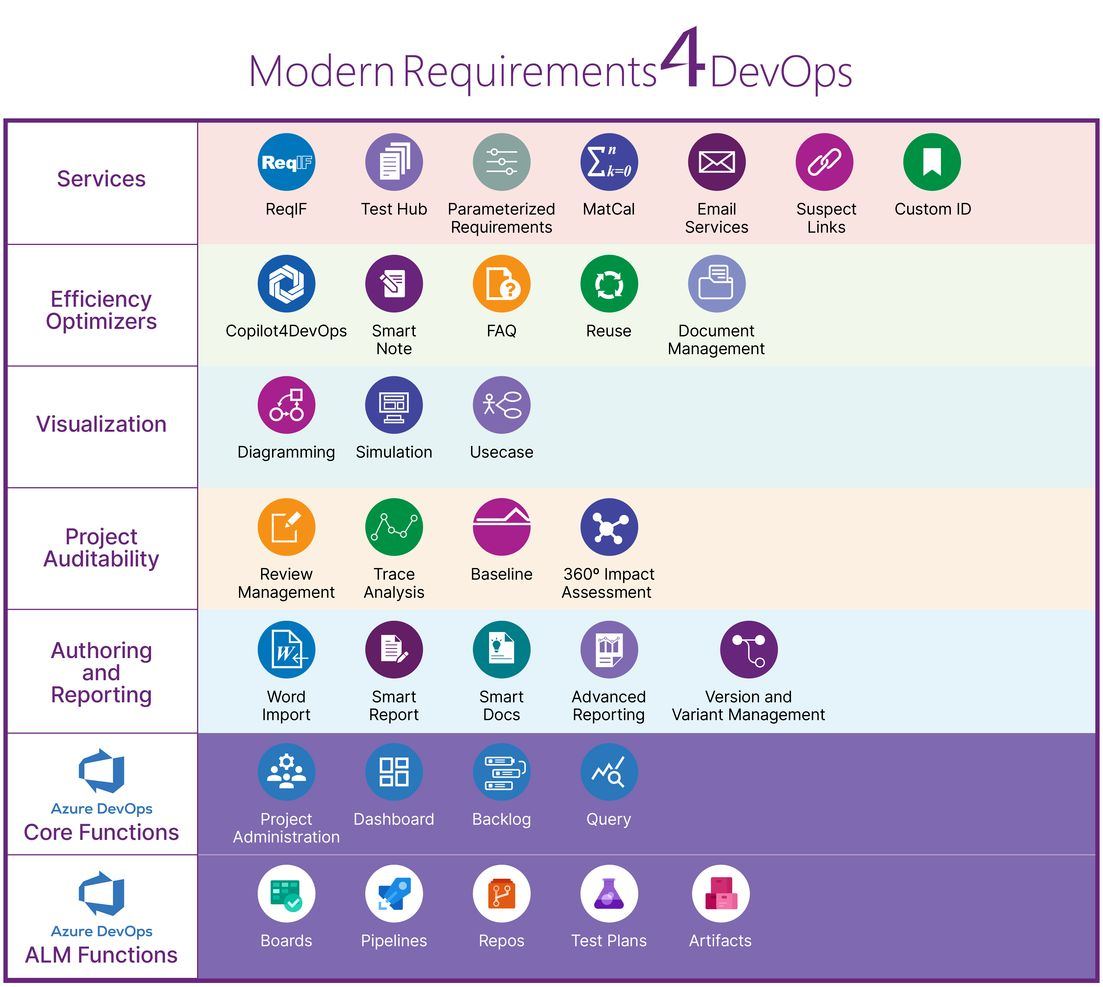
Modern Requirements is an extension of Azure DevOps. It only works there, so teams on Jira or other platforms cannot use it.
“It is built as an extension of Azure DevOps, so a team that runs on Jira, GitHub or GitLab would need a different tool.”Source: the vendor's own product pages
“On requirements with very deep link chains the tree gets long, so I had to collapse branches to keep track of where I was.”G2 review, verified user in electrical and electronic manufacturing, enterprise, 4.5/5 stars, 19 October 2026 · source
ReqView
Best for Very small technical teams working from files in Git.
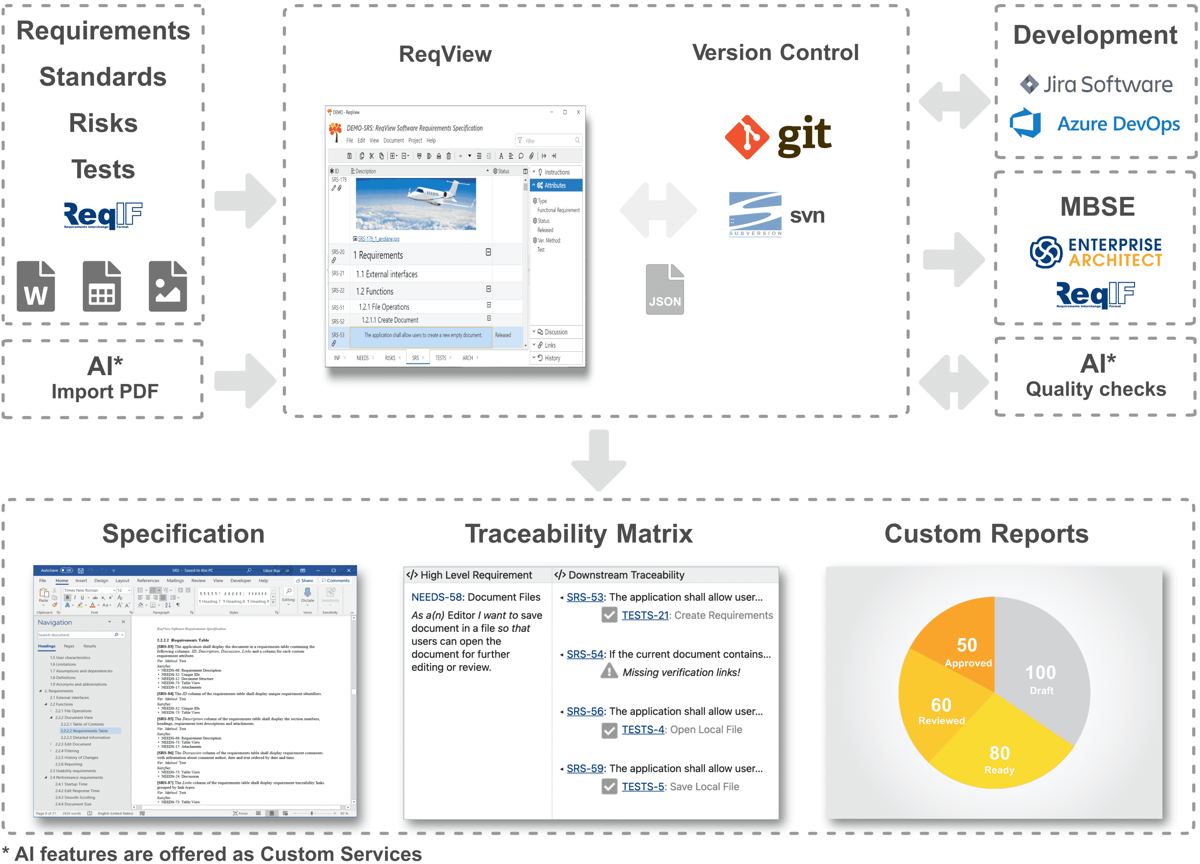
ReqView stores requirements as files. Teams that need hosted multiuser workflow, approvals and an audit trail outgrow it.
“I dislike that you cannot see when others are editing or viewing the same document/requirement.”G2 review, verified user in biotechnology, enterprise, 4.5/5 stars, 19 February 2019 · source
“You have to 'unlock' the project to edit because it is easy to forget that.”G2 review, verified user in biotechnology, enterprise, 3 May 2019
Perforce Helix ALM
Best for Teams focused narrowly on requirement to test coverage.
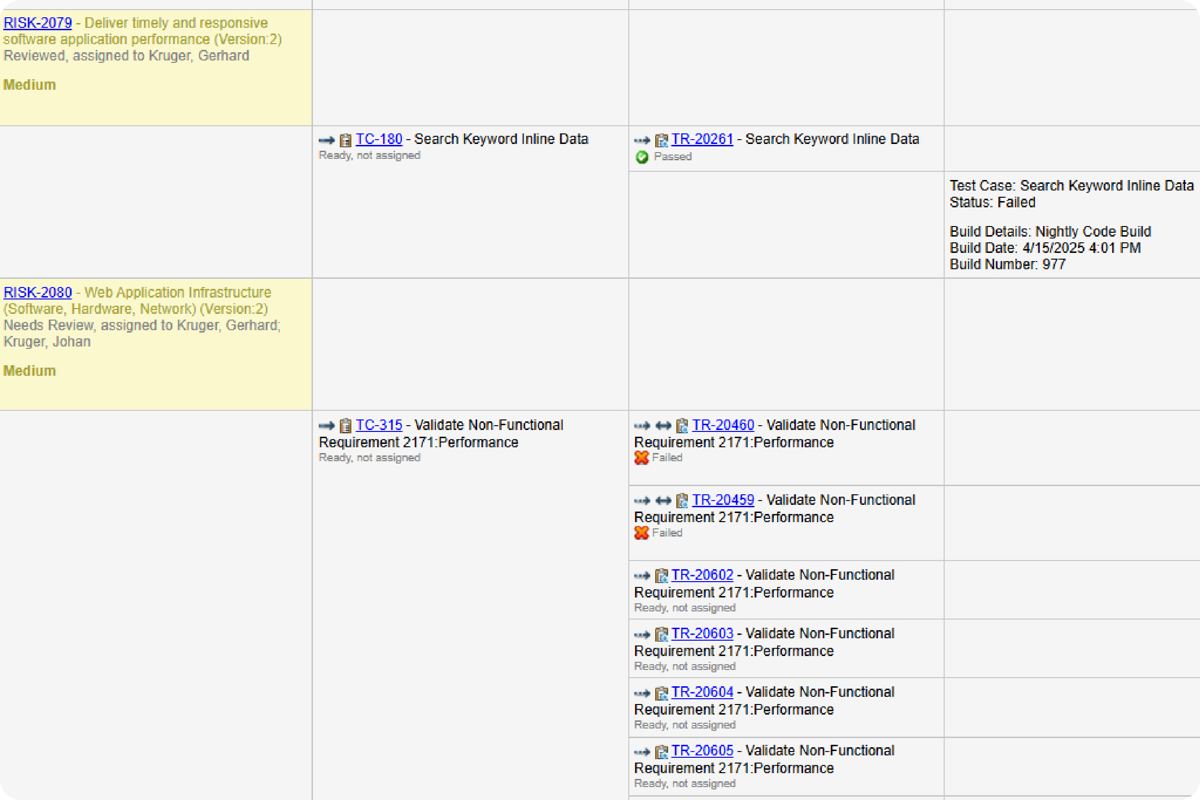
Helix ALM centres on the link between requirements and tests. Teams need to shape its general model to fit a regulated process themselves.
“The Helix risk management is terrible. Okay, this Helix is fundamentally a bug tracking tool... It's all workarounds.”Real feedback from a US medical device consultant who has run Helix at several clients, May 2026
“Licenses are expensive and not ideal for small/independent companies.”G2 review, QA lead, enterprise, 2/5 stars, 13 May 2015 · source
Inflectra SpiraTeam
Best for Budget conscious teams that want basic requirements and test tracking.
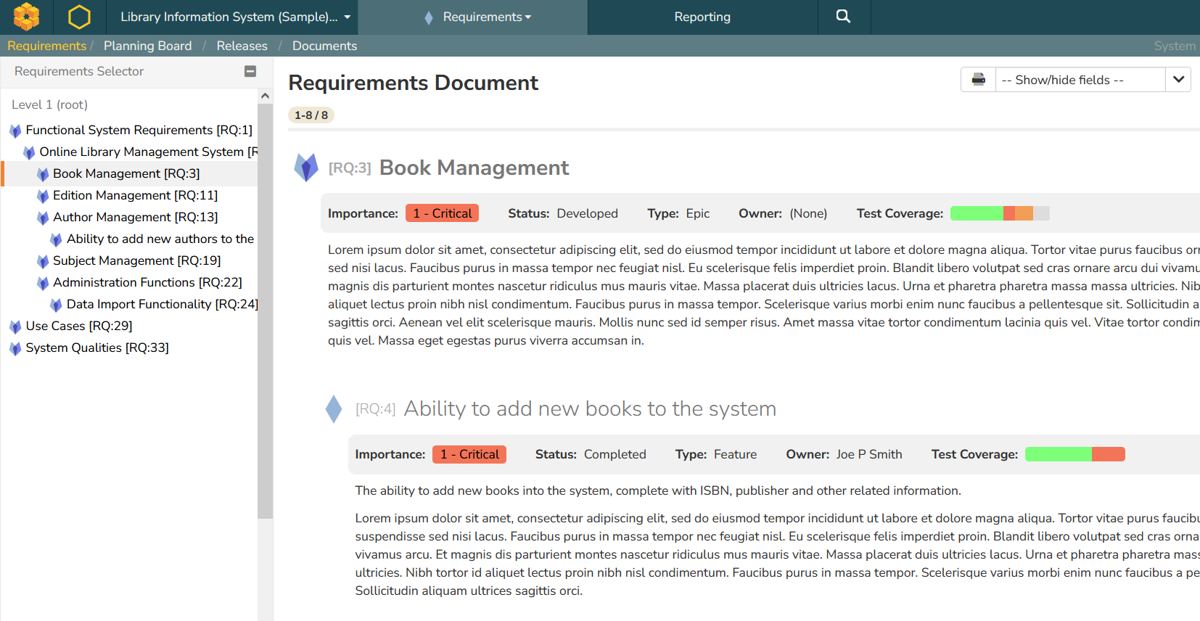
SpiraTeam covers requirements, tests and defects at a broad level rather than in depth, without dedicated compliance tooling.
“Cross project collaboration is not possible. I cannot map test cases/test sets from one project to another.”G2 review, verified user in entertainment, mid-market, 3/5 stars, 25 April 2016 · source
“There are not enough reports that are readable.”G2 review, verified user in insurance, enterprise, 2.5/5 stars, 31 July 2017
Why a regulated product is a different decision
The FDA's Quality Management System Regulation replaced the Quality System Regulation on 2 February 2026 and incorporates ISO 13485 by reference. Design control records now need to sit in ISO 13485 structure, and the rule now explicitly requires risk management, so the ISO 14971 file belongs inside the design record rather than beside it. Teams whose requirements lived in a tool that models design controls treated that change as a mapping exercise. Teams working from documents had a rewrite.
In an audit nobody asks which tool you use. The auditor picks a requirement, walks it forward to a verification result and back to a user need, and asks for the risk analysis, the control and the evidence that the control works. If that takes more than a minute on screen, the tool is not doing its job. Run that test in every demo.
If any part of your product is software, IEC 62304 adds software requirements traced to system requirements, an architecture record, verification in proportion to safety class, and problem resolution linked back to risk. Some tools treat that as a template pack. Others build it into the model.
How to choose
- Most medical device and regulated product teams: Matrix Req
- Very large programmes with dedicated admins: Jama Connect
- Already committed to Siemens PLM: Polarion
- Locked into a DOORS estate: DOORS Next
- Azure DevOps only shops: Modern Requirements
Frequently asked questions
What is the best requirements management software in 2026?
For medical device and regulated product teams, Matrix Req ranks first in this guide because requirements, risks, tests and CAPA are linked items in one system, change impact is flagged automatically and the design history file is generated from live data.
Is Jira good enough for requirements management?
Jira can hold requirements, and for an early stage team it can be the right call for a few months. It does not give you baselines, a coverage model or an audit trail you would want to defend in a regulated audit without plugins, so most regulated teams move to a dedicated tool or connect Jira to one.
What does requirements management software need to do for medical devices?
It needs to hold requirements as items rather than paragraphs, keep links alive through change, show coverage as a live view, control baselines and approvals, and support IEC 62304 and ISO 14971 traceability. Since 2 February 2026 the FDA's QMSR also expects design records in ISO 13485 structure.
How long does it take to move requirements out of spreadsheets?
It depends on how clean the spreadsheet is. One requirement per row with consistent identifiers moves quickly. Requirements spread across documents and email take longer, and most of that time goes into a cleanup you needed anyway. Move one subsystem first.